TD Bank (US)
- 4.2
- Rating
- 5.00M
- Installs
- Free
- Price

 Analysis by App-foxy
Managing everyday banking from a phone sounds simple until a payment is due while you are away from home, a deposit needs attention, or you want to check your balance without opening a laptop. I reviewed TD Bank as a mobile finance app built around that kind of routine access. It is free, made by TD Bank, N.A., and aimed at Everyone, so its appeal is less about clever extras and more about putting familiar banking tasks in one place.
That focus matters. I would not describe it as a budgeting coach, an investing platform, or a replacement for every financial service. I see it as a practical companion for people who already use TD Bank and want a convenient way to keep track of their money. The app has been available since August 14, 2010, and its current version is 26.7.1.6, which gives it the feel of a long-running banking product rather than a newly launched experiment.
Everyday banking works best when the important action is close at hand
I find the most useful way to judge a banking app is to ask what happens when a task needs attention at an inconvenient moment. Here, I focus on how a live connection affects checking account activity and deciding what to do next, rather than treating quick access as a substitute for careful review. That distinction leads naturally to the practical question of where a phone helps most.
You May Also Like

 Blood Strike: 2.5 Anniversary
Blood Strike’s Loadouts Turn Every Drop Into a Tactical Gamble
A close look at Blood Strike’s custom loadouts: how fast access to signature weapons reshapes its battle royale rhythm, rewards preparation, and narrows the gap between fights.

 Pandora - Music & Podcasts
Pandora’s Music Is Easy to Start, but Harder to Recover
Pandora’s strength is its low-effort path from a seed to a station. Its weak spot is how much confidence it asks you to place in connection, setup, and quiet recovery.

 8 Ball Pool
 Is Built on Rivalries, Rematches, and Routine
A close look at the rivalries, rematches, shared routines, and unanswered safety questions that turn a quick pool match into a persistent mobile community.

 Samsung Music
’s Quiet Strength Is Playing What You Already Own
Its reach comes less from spectacle than from dependable access to a personal library. That simplicity is both the app’s strongest retention engine and its ceiling.

 AccuWeather: Weather Radar
AccuWeather Review: A Quick, Clear Forecast for Everyday Decisions
For everyday plans, the best forecast is the one you can understand quickly. AccuWeather makes rain timing, radar, and local conditions easy to act on, with a few trade-offs.

 Hill Climb Racing
Why Hill Climb Racing Still Turns Crashes Into One More Run
A tiny car, a bumpy hill and one more upgrade: Hill Climb Racing keeps resurfacing because its simple chaos makes every near-miss feel personal.
More From Our News Desk



The capability that makes the biggest difference
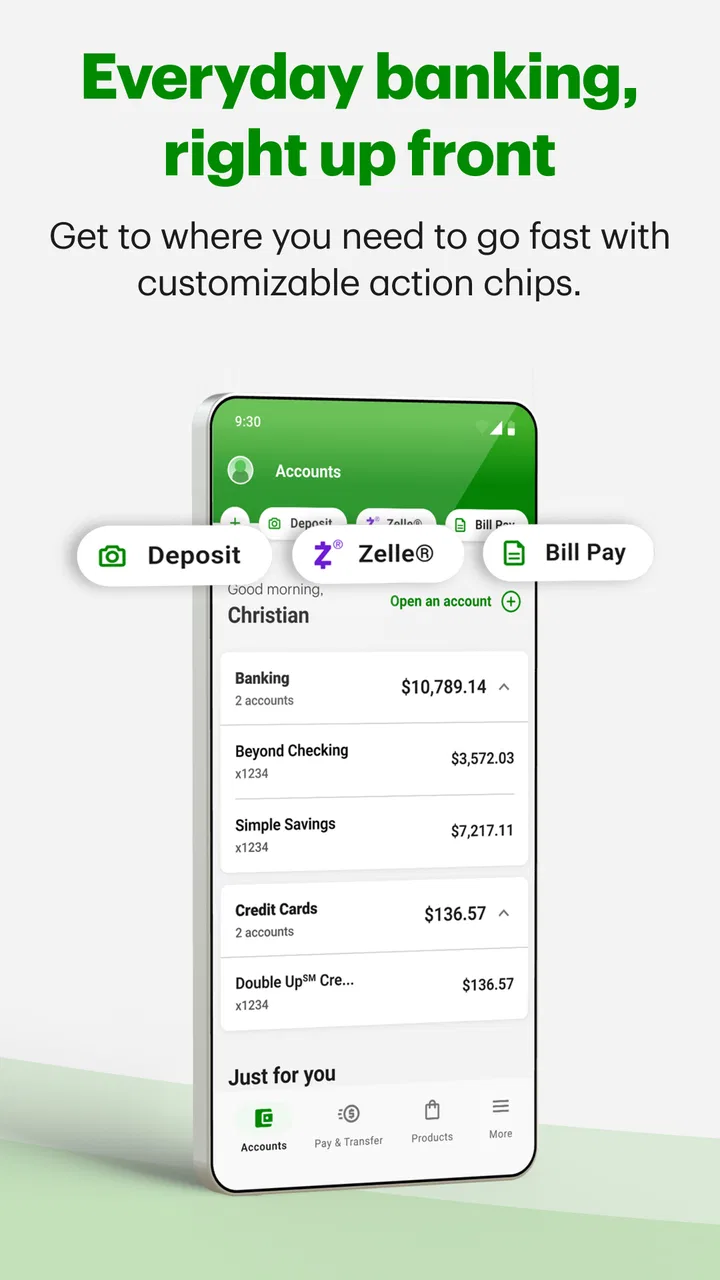
The most useful capability here is the ability to handle everyday banking in one mobile workspace. In my experience, the value is not one spectacular feature; it is the reduction in small steps between noticing a financial task and dealing with it. Checking an account, reviewing recent activity, moving through a routine payment process, or handling a deposit from the same app feels more practical than switching between separate services.
That central approach is especially helpful when banking is something you do in short moments. I might check available funds before paying for groceries, look over recent activity after a busy weekend, or deal with a banking task while commuting. A desktop website can still be useful for longer sessions, but a phone app is better suited to these brief checks because it is already with me.
The distinction between a balance check and a meaningful financial review is important. A quick glance can tell me whether I have enough room for an upcoming expense, but it does not automatically explain my wider spending habits. I would use this app for access and control, while relying on a separate budgeting method if I wanted detailed category analysis or a long-term plan.
TD Bank’s average rating is 4.1 from around 89 thousand ratings, with roughly 34 thousand written reviews. That level of public feedback suggests the app is widely used and familiar to many customers, but I would not treat the score as a guarantee of a perfect experience. Banking apps are judged heavily by device compatibility, account setup, security checks, and the user’s specific banking relationship, so the same product can feel smooth to one person and restrictive to another.
What using it feels like in practice
I find the strongest workflow begins with a specific question. Instead of opening the app and wandering through every option, I would decide whether I need to confirm a balance, inspect a transaction, or complete a routine banking task. That habit keeps the experience focused and reduces the chance of treating a quick check as a full review of my finances.
For example, imagine I am leaving work and remember that a recurring payment is scheduled soon. I can open the app, look at the account activity, and make a more informed decision about whether to move money or delay a discretionary purchase. The benefit is not merely speed. It is having timely information before I commit to another expense.
A second useful habit is reviewing recent activity after an unusual purchase day. If I have made several small purchases, a single balance may not tell me what changed. Looking through the activity gives me a chance to recognize a duplicate-looking charge, a forgotten purchase, or a transaction that needs attention. I would rather catch that while the details are fresh than discover it when reconciling finances much later.
Mobile banking also changes how often people interact with their accounts. On a computer, I tend to postpone a task until I have enough time. On a phone, I am more likely to make several short checks. That can be a genuine advantage for someone who wants closer awareness of cash flow, although it can become unhelpful if checking turns into constant anxiety without a plan for acting on what appears.
A realistic day-to-day scenario
Consider a customer who receives income into a TD Bank account and uses that account for rent, utilities, food, and occasional purchases. In the morning, the app can serve as a quick checkpoint before a large bill is paid. During the day, it can help confirm whether a recent transaction appears as expected. In the evening, the customer can review activity and decide whether the remaining balance supports a planned weekend expense.
What I like about this scenario is that it does not require a complicated financial system. The app becomes part of a simple routine: check before spending, inspect after spending, and respond when something looks unfamiliar. That is more realistic for many people than promising that an app alone will transform their finances.
The same workflow can help someone who shares responsibility for household expenses. One person can use the phone to check the account before paying a bill, while both people can agree on a regular time to review activity. It does not replace communication between household members, but it can make the conversation more concrete because the discussion starts with current account information rather than memory.
For a small business owner, freelancer, or anyone mixing personal and work expenses, I would be more cautious. The app may provide convenient access to the bank account, but convenience is not the same as bookkeeping. I would still keep receipts, separate business records, and use accounting software when tax preparation or detailed reporting matters.
Where it compares well with usual alternatives
The usual alternatives are a bank’s mobile website, a desktop browser, a dedicated budgeting app, or visiting a branch. Each option has a different strength. A browser can be preferable when I need a larger screen and more room to inspect information. A budgeting app may offer broader views across several institutions. A branch remains useful when a situation needs direct assistance or a conversation rather than a self-service screen.
Against those alternatives, TD Bank’s app makes the most sense for customers who want the bank’s everyday access in a phone-first format. It is more immediate than waiting until I am at a computer, and it is more directly connected to the bank relationship than a general-purpose finance tracker. The trade-off is that it is not the ideal tool for combining accounts from many financial institutions or building a detailed financial dashboard.
I also prefer a bank app when I need to verify information at the source. A third-party finance app can be useful for a wider overview, but a direct banking app is the place I would go when I want to inspect the account itself. That does not make one approach universally better; it means the choice depends on whether I value direct access or broad aggregation at that moment.
The friction I would plan for
Mobile banking has unavoidable moments of friction. A phone can be inconvenient when the screen is small, the connection is poor, or I need to compare several pieces of information at once. I would not want to make a complicated financial decision while rushing through a crowded place. For those situations, a computer or a direct conversation with the bank can be more comfortable.
Security is another practical consideration. A banking app should be treated differently from a shopping or entertainment app. I would use a screen lock, avoid signing in on a shared device, and take care when reviewing account details in public. These habits are not special features of TD Bank; they are part of using any mobile banking service responsibly.
There is also a psychological trade-off. Fast access makes it easier to notice a problem early, but it can encourage impulsive decisions based on one balance figure. I would check the timing of pending and recent activity before assuming that the displayed amount represents my complete financial picture. When money is tight, I would leave a margin rather than spending right up to what appears available.
Another limitation is scope. The app is a finance tool for banking access, not a complete personal-finance education system. Someone looking for detailed investment research, advanced forecasting, or a unified view of accounts at unrelated institutions may be better served by specialized software. I would not choose this app solely because I wanted deep analysis.
Small habits that make the app more useful
My first tip is to use it at decision points rather than only after a problem appears. Checking before a large purchase is more useful than discovering later that several smaller transactions have already reduced the available cushion. That simple change turns the app from a passive balance viewer into a practical checkpoint.
My second tip is to review activity in patterns, not just isolated entries. A single transaction may look ordinary, while several similar entries close together may reveal a subscription, a repeated purchase, or an error worth investigating. This is one of the less obvious benefits of having regular mobile access: the review can happen often enough that unusual activity stands out.
My third tip is to separate convenience from record keeping. I would use the app to see what is happening now, but I would not rely on memory for annual expenses, reimbursements, or business documentation. If a transaction matters later, I would save the relevant information in whatever record-keeping system I already trust.
A fourth useful habit is choosing the right device for the task. A phone is excellent for a quick balance check or a short activity review. If I need to think through a larger money decision, compare multiple accounts, or organize records, I would move to a larger screen or another tool. Knowing when not to use the mobile app is part of using it well.
Who will gain the most from it
This app is a strong fit for an existing TD Bank customer who values frequent, straightforward access from a phone. It should appeal to people who want to check their accounts during the day, keep an eye on recent activity, and handle routine banking without planning a visit to a branch or waiting until they are near a computer.
It can also suit people who are trying to become more attentive to daily cash flow. The app will not create discipline on its own, but regular, purposeful checks can support better timing around bills and discretionary spending. I especially see value for someone whose financial picture changes often and who benefits from confirming information before acting.
Families and households may find the access convenient, but they should agree on how account information is reviewed and how spending decisions are communicated. The app can make information easier to reach; it cannot settle disagreements about priorities or replace a shared budget.
I would recommend a different option to someone who does not bank with TD Bank, wants a broad multi-bank dashboard, or needs advanced financial planning. A dedicated budgeting or accounting product may be more suitable for detailed categorization and reporting. Likewise, a person who rarely uses a smartphone may be happier with a browser or in-person banking.
Availability, cost, and my final assessment
TD Bank is listed as a free app with more than 5 million installs, and its Everyone age rating makes it broadly accessible from a store perspective. Those figures show substantial reach, but they do not change the central question: whether it matches your banking relationship and the way you prefer to manage money.
For me, the best reason to use it is the dependable convenience of bringing everyday banking closer to the moment when a decision happens. I can check before spending, inspect activity afterward, and respond sooner when something needs attention. That is a meaningful improvement over postponing every task until I have access to a desktop or a branch.
My recommendation is therefore specific rather than universal: if you already use TD Bank and want a practical mobile route to routine account management, I think this app is worth trying. If you expect it to replace a budgeting system, accounting package, or full financial-planning service, you will probably find its role narrower than that. Used for what it does best, it turns everyday banking into a shorter, more manageable routine, and that is the capability I would value most.
FAQs for TD Bank (US)
01What services are available through the TD Bank app?
The TD Bank app offers a wide range of services, including checking account balances, transferring funds between accounts, paying bills, and depositing checks using your mobile device. Additionally, users can manage their credit cards, view transaction history, and even find nearby ATMs and branches through the app's integrated location services.
02Is the TD Bank app secure to use for banking transactions?
Yes, the TD Bank app employs advanced security measures to ensure the safety of your banking transactions. It uses encryption and multi-factor authentication to protect your personal and financial information. Additionally, users are encouraged to set strong passwords and enable biometric logins where available for added security.
03Can I deposit checks using the TD Bank app?
Absolutely. The TD Bank app includes a mobile check deposit feature that allows users to deposit checks by taking a photo with their smartphone. This feature is convenient and saves time, especially if you can't visit a branch. Simply endorse the check and follow the app’s prompts to complete the deposit.
04Does the TD Bank app support account alerts and notifications?
Yes, the TD Bank app supports customizable alerts and notifications. Users can set up alerts for low balances, large transactions, and payment due dates. These alerts help you stay informed about your account's status and ensure you never miss important updates or deadlines related to your finances.
05What should I do if the TD Bank app is not working properly?
If you encounter issues with the TD Bank app, try restarting your device or reinstalling the app. Ensure your app and operating system are up to date. If problems persist, contact TD Bank customer support for assistance. They can help troubleshoot issues and provide guidance to resolve any technical difficulties.
Pros
- User-friendly interface with intuitive navigation.
- Secure login features enhance account safety.
- Real-time alerts for transactions and updates.
- Wide range of banking services available.
- 24/7 customer support through chat and phone.
Cons
- Limited functionality for non-US residents.
- Occasional app crashes during high traffic.
- Some features require frequent updates.
- In-app advertisements can be distracting.
- Slow response times during peak hours.

TD Bank (US)
Gallery